Croatia activity holidays
Activity Holidays in Croatia: What an Active Week Actually Involves
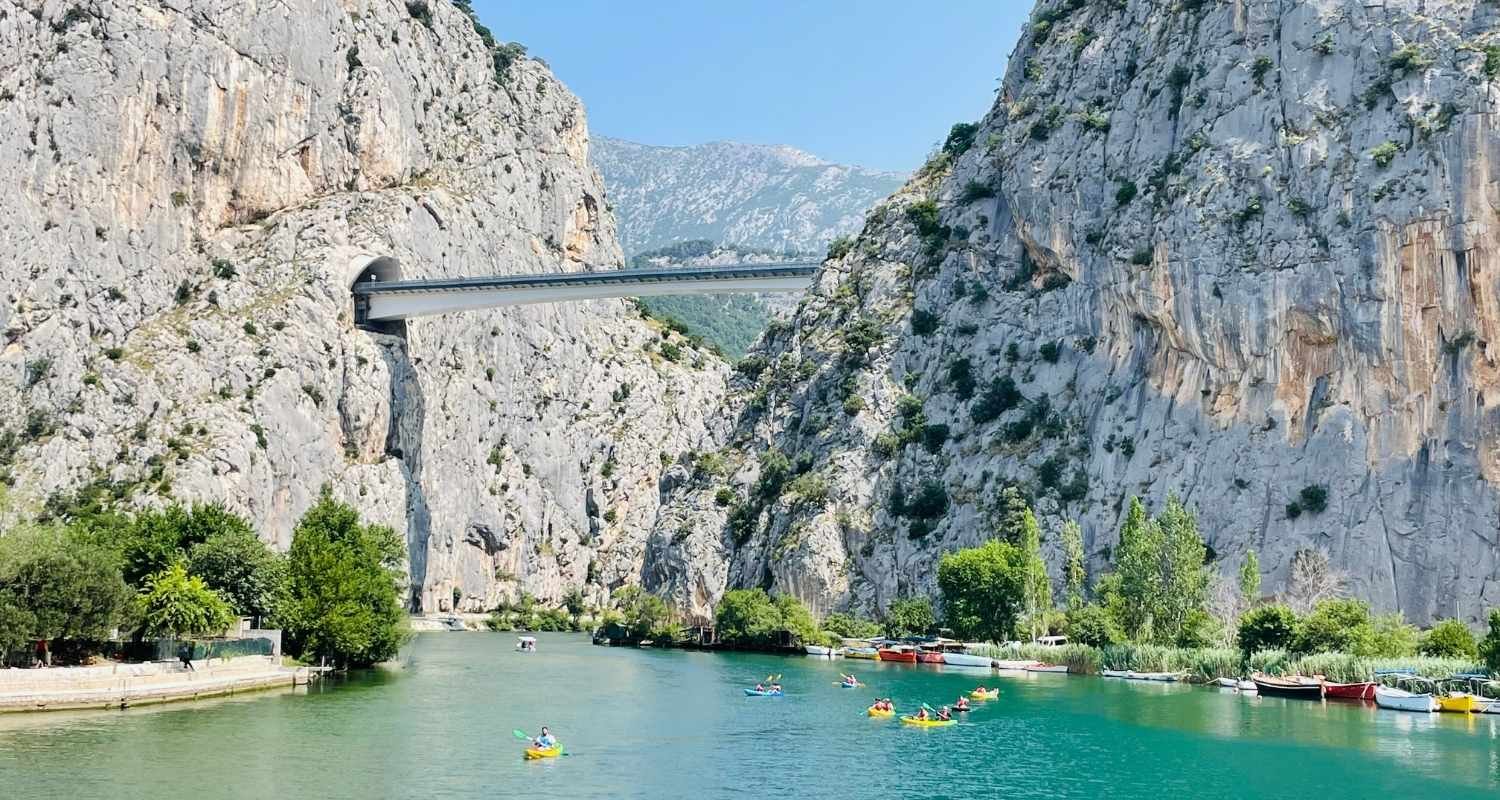
We run these weeks out of Omiš, a small town where the Cetina river meets the Adriatic about forty minutes down the coast from Split. We have been doing it since 2015, and in that time the phrase “activity holiday in Croatia” has come to mean almost anything — a catamaran with a paddleboard strapped to the back, a coach tour with one afternoon of cycling, or a genuine week of moving every day.
This page is about the third kind, because that is what we run and that is what people are usually looking for when they type the phrase. If you want a list of individual things to try rather than a whole trip, our guide to adventure activities in Croatia is the better page.
What counts as an activity holiday
The useful test is simple: on how many days of the trip do you actually do something physical, and does the trip move you between landscapes?
A real activity week in Dalmatia gives you a different element most days. River one day, sea the next, mountain the day after. Croatia is unusually good for this because the geography is stacked tightly — from our base in Omiš you can be in a river canyon in twenty minutes, on open sea in five, and on a mountain ridge at 800 metres within an hour. In most of Europe those three things are three different holidays.
What it is not: a beach week with an optional excursion desk. If the itinerary has two activities across seven days and the rest is “at leisure”, that is a beach holiday with activities available, and it should cost accordingly.
What a week actually looks like
Our own weeks run to a rhythm that we arrived at by trial and error, and it is worth explaining because the logic applies whoever you book with.
Day one is deliberately easy. People arrive jet-lagged or after a long drive. We do a short kayak along the Omiš coastline, into the sea caves, with a swim stop. It is two and a half hours and nobody is tested.
Rafting on the Cetina goes early in the week. It is the activity that most groups are nervous about and least need to be — the Cetina through the Zadvarje section is graded for beginners and the raft is the safest place on the river. Getting it done early settles people.
Canyoning is the middle of the week. It is the hardest day, physically and mentally: wetsuit, jumps you can opt out of, abseils, and several hours in cold water. Fitter groups get the extreme section upstream; most groups get the canyon from Zadvarje down. This is the day people talk about afterwards.
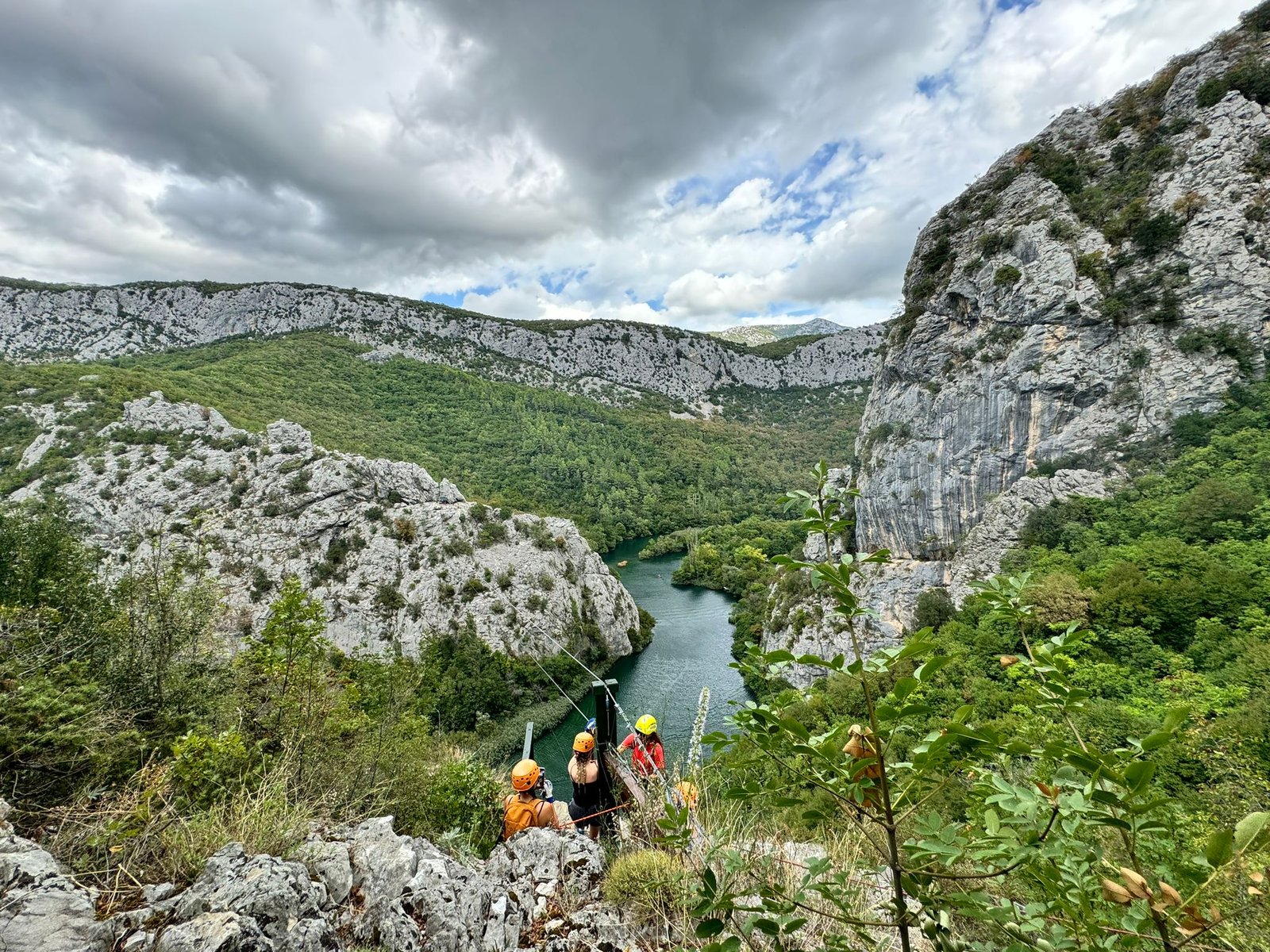
Walking goes late. By then legs are used to work. On a five-day week we do the Omiška Dinara ridge above the town — a stiff climb to a fortress with the whole Brač channel laid out below. On seven days we add Biokovo, which is a different order of mountain.
The last day is short and coastal. Nobody wants a six-hour mountain day before a flight.
Seven-day weeks add a day trip into Krka or Plitvice and one more sea day. Those two national parks are the postcard Croatia, and they are worth the drive, but they are walking-on-boardwalks days rather than hard days.
Activity holidays, walking holidays, multi-activity weeks
The vocabulary is a mess, and it matters because the trips are genuinely different.
An activity holiday or active vacation usually means a mixed week — several different sports, nothing done in depth. This is what most people want for a first trip to Croatia.
A multi-activity holiday is the same thing, named more precisely. Our multi-activity weeks are 5 and 7 days, from €590 and €730 per person respectively, with accommodation, breakfast, guides and all equipment included.
A walking holiday means walking is the trip, not one day of it. If that is what you are after, Croatia is seriously underrated for it, and we keep that separate: our hiking and walking trips run as a 6-day guided holiday through Plitvice, Krka and the Omiška Dinara ridge from €850, or a 5-day self-guided version from €600 where you walk our marked routes on your own schedule and we handle the logistics.
If you are American and typing “walking vacation in Croatia”, that last page is the one you want — the trips are the same, the word is just different.

What it costs and what the number covers
Direct-booked, a week-long activity holiday in Dalmatia with a local operator sits somewhere around €590 to €900 per person for five to seven days, with accommodation, breakfast, guiding and equipment in. Our own figures are at the lower end of that because we own the kit and guide the trips ourselves rather than subcontracting.
What tends not to be included anywhere, ours included: flights, transfers from Split airport, lunches and dinners, travel insurance, and the single supplement if you want a room to yourself.
Where the big international operators cost two or three times more, you are usually paying for a UK or US-based tour leader flown in alongside the local guides, a booking guarantee backed by a larger company, and a brochure. Those are real things to pay for. They are not guiding quality — the people actually taking you down the canyon are local either way, and in our case they are the same handful of guides who grew up on this river.
Be suspicious of any week under about €400 per person including accommodation. The maths does not work unless the activities are shorter than advertised or the group is very large.
Choosing your month
May and June
May and June are the best weeks of the year for this and it is not close. The Cetina still has snowmelt volume, the sea has warmed enough to swim, the canyon is cold but manageable, and the coast is not yet full. Late May is our own pick.
July and August
July and August are hot — 33°C and up inland. The water activities are perfect and the walking is genuinely unpleasant after about ten in the morning. If you come in high summer, expect early starts and accept that mountain days get cut short.
September
September is the quiet favourite. Warm sea, thinner crowds, lower river. Canyoning is at its most comfortable. Rafting is tamer than spring.
October
October still works for walking — arguably it is the best walking month — but the river drops and some water activities close for the season.
November to April
We do not run these weeks between November and April. The river is unpredictable and the canyon is dangerous.
Who these weeks suit
Mixed-ability groups, mostly. You need to be able to walk for three or four hours and swim a little, and you need to be comfortable being cold and wet for part of a day. You do not need to be an athlete, and nothing on a standard week requires previous experience.
They work well for couples, for groups of friends in their thirties and forties, and for families with teenagers — fourteen upwards for canyoning, younger for rafting and kayaking. They work less well for anyone who wants a lie-in, and genuinely badly for anyone who cannot swim at all, because most of the week touches water.
We cap groups at twelve. That is not a marketing number: above twelve, a canyon day turns into a queue at every abseil.
Frequently asked questions
What is the difference between an activity holiday and an adventure holiday in Croatia?
Nothing consistent — operators use the words interchangeably. In practice “adventure” tends to signal rafting and canyoning, and “activity” tends to signal a gentler mix with more walking and kayaking. Read the day-by-day itinerary rather than the label.
Do I need to be fit for an activity holiday in Croatia?
You need ordinary fitness: three to four hours of walking, a short swim, and the stamina for several consecutive active days. Canyoning is the one demanding day, and most of its hard parts are optional.
Can I book single activities instead of a whole week?
Yes. Our day tours run rafting, canyoning and kayaking as half or full days if you are already staying on the coast and want one or two.
What is included in the price?
On our weeks: accommodation, breakfast, all guiding, all technical equipment, and transport to and from each activity. Not included: flights, airport transfers, lunches and dinners, insurance, single supplement.
Is Croatia good for an active vacation compared with the Alps or Slovenia?
For variety in a small radius, yes — it is hard to match river, sea and mountain within an hour of one base. For sustained high-mountain walking, Slovenia and the Alps are stronger. For a mixed active week with swimming, Dalmatia is better.
When is the best time for an activity holiday in Croatia?
Late May to mid-June, or September. July and August are too hot for comfortable walking; the season closes from November to April.
Walk, paddle and raft with the people who live here
We are a small operator in Omiš. The guides on your trip are the people who run the company, and the river you will be on is the one we grew up next to. If you want to talk through whether a 5-day or 7-day week suits you, get in touch — we answer our own emails.
Get in touchSee the 5- and 7-day weeks
Rated 5.0 across [CONFIRM NUMBER] Google reviews.