Cetina rafting guide
Rafting Cetina: Phones, Cameras and Photos (What to Bring and What to Leave)
Leave your phone dry and in the vehicle or in waterproof storage, and do not tie a camera to your wrist. On a Cetina rafting trip, the 10 km route has real rapids and at least one waterfall drop, and a loose phone has no future in that. The better plan is to let the guide team capture the day, and to bring one strapped-on action camera only if you have a proper chest or helmet mount.
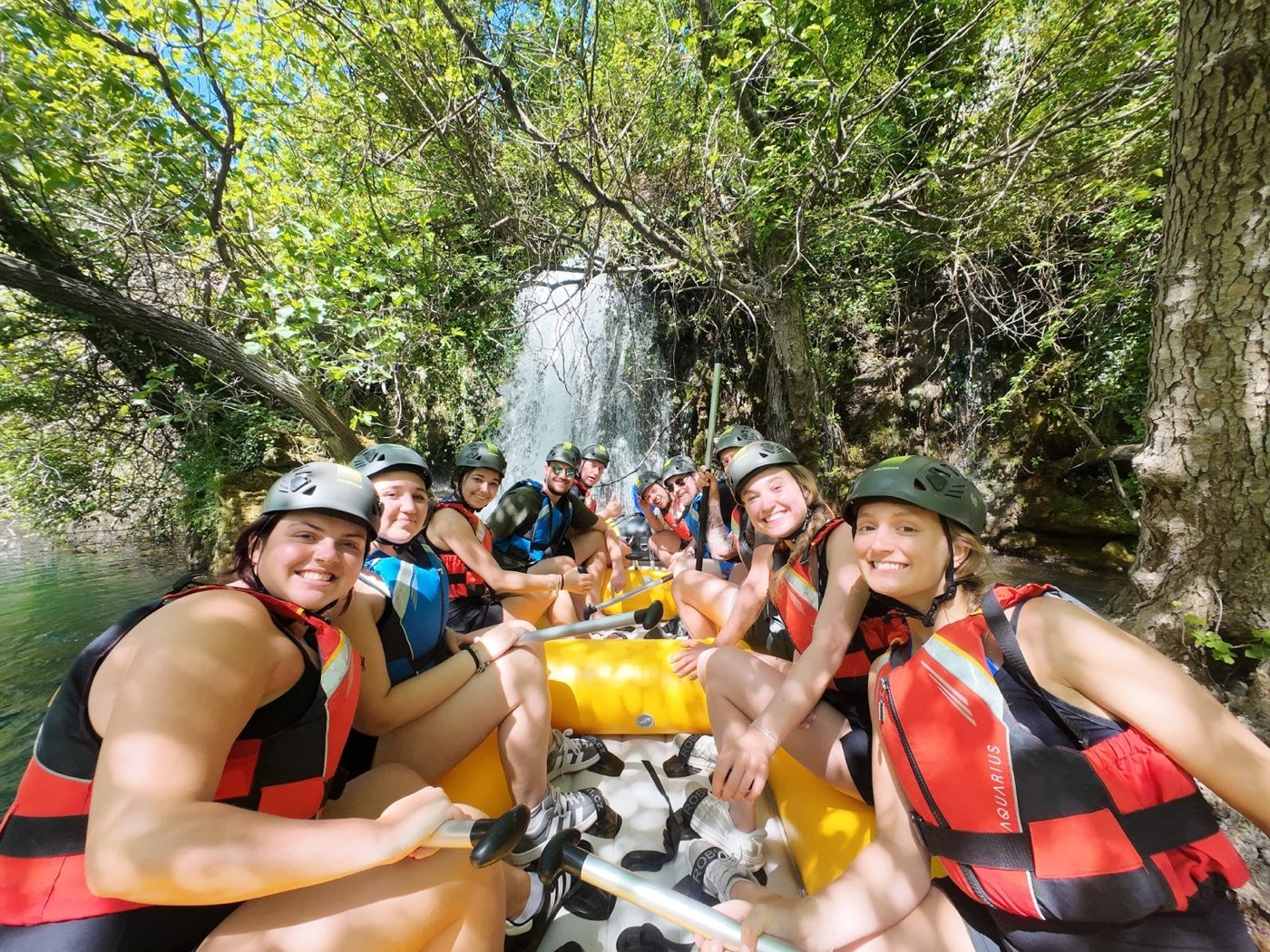
The short answer on phones and cameras
People ask me about their phones before they ask about the rapids. It's a fair question. A modern phone costs more than most of the gear on the raft, and the Cetina has a habit of testing what is not strapped down.
I've guided on this river since 2003, and I'm registered with the Croatian Mountain Rescue Service (HGSS). In that time I've seen phones survive and phones sink, and the difference was never luck. It was where the phone was and how it was held.
- Route10 km of river
- On the waterabout 2.5 hours
- Water temp14–17°C
- Phonesleave dry
- Action camschest or helmet mount only
- Photosteam films the trip
What your camera is up against
The rafting route is 10 km from the upper stretch down toward Omiš. Most of it is calm enough to float and look around. Then the river drops, narrows and gets loud. That is where the raft bounces, the paddlers lean in and everyone gets properly soaked.
The water is cold, around 14 to 17°C, so it doesn't forgive a lost grip. If something goes over the side, we're not stopping the raft to chase it. The first job is always people.
The phone I remember best belonged to a guest who held it out of the raft "just for one shot" at the waterfall. It went in at the first drop. The footage the team took of him laughing about it was better than anything he would have filmed. Keep your hands on the rope, and the day goes better.
The phone rule
Here is the simple version I give every group at the briefing:
- No loose phone in a hand, a pocket or a bra strap.
- No camera on a wrist strap. If you fall in, the strap is the last thing you want attached to you.
- No selfie sticks. They catch paddles and people.
What works instead is boring and reliable: leave the phone dry before the trip, take your photos at the meeting point, and let someone else capture the river.
If you want to bring a GoPro
An action camera can work well on a raft, if you set it up properly. These are the rules I follow when I check a guest's camera:
- Use a chest or helmet mount. Your hands stay free to hold the rope and paddle.
- Add a floating handle or foam float if you carry it at all. Cameras sink fast.
- Check the lens and the door seal before you leave the car. One hair in the seal is enough to flood it.
- Tell your guide. They'll tell you when to stop filming and paddle.
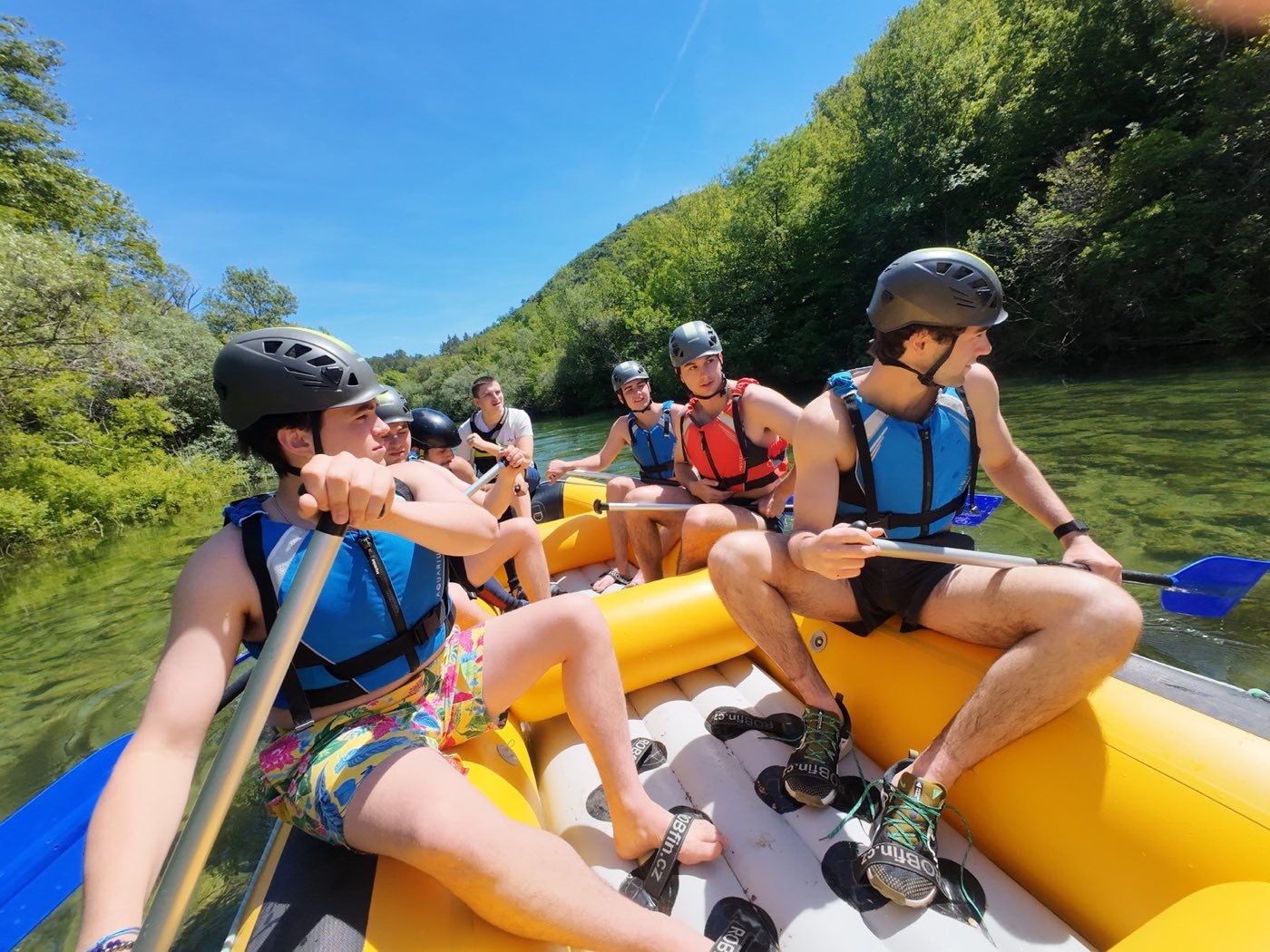
How to get good photos without your own camera
The best pictures of a raft are taken from outside the raft. That's why our team shoots the trip, so you can paddle instead of filming. Footage from the bank, from a drone angle or from the next raft shows the whole crew, the spray and the faces, which a chest camera never does.
You'll get more from the day by looking up. The canyon walls, the green water and the moment the raft drops through the waterfall are worth watching rather than recording.
Tips for better photos on the day
- Take your group photo before the trip, in dry clothes, at the meeting point.
- Smile and look at the camera when you pass photo points. We'll tell you where they are.
- Wear bright colors if you want to stand out in the footage.
- Bring a dry set of clothes for afterwards, so you can look through the pictures comfortably.
Valuables: what to leave where
| Item | On the raft? | Better option |
|---|---|---|
| Phone | No | Leave dry, or ask about waterproof storage |
| Action camera | Only on a chest or helmet mount | Let the team film the trip |
| Sunglasses | Only with a strap | Leave them dry, or bring a cheap pair |
| Wallet, keys | No | Leave in the vehicle |
| Wedding ring, jewelry | No | Leave at the hotel |
“We were picked up in Split and brought to Omiš without any hassle… I would highly recommend it for a family trip.”
Helen Tomblin · Google review · April 2026 · rafting with Split transferWhat to wear so you're comfortable in the photos
Wear swimwear under quick-drying clothes, and shoes that stay on your feet. Flip-flops don't. A neoprene wetsuit is provided in the colder months, so you don't have to buy one just for the day. Pack a dry set of clothes, a towel and a bottle of water for afterwards. We don't provide food, so bring a snack.
How the season changes what you can bring
In July and August the air is hot enough that a wet phone feels like a small problem. In April and October it feels like a bigger one, because you're cold, soaked and fumbling with a screen. The Cetina doesn't change with the calendar, but your tolerance does.
In the cooler months we provide wetsuits, and the water feels colder against bare hands. Most people don't want to hold a camera at all. That's a good instinct. Look at the river, and let the footage come from the team.
Rafting with children and cameras
Parents often ask whether they can film their kids. You can, with the right mount, and I'd suggest doing it on the calm sections only. When the river picks up, both hands go on the rope. The best family photos I've seen from this river are the ones taken at the start, in dry lifejackets and helmets, with a grin and no idea what's coming.
Five mistakes I see at the meeting point
- Bringing a phone "just in case." In case of what? You can't call anyone from a raft in a gorge.
- Wearing the camera strap around the neck. A heavy camera swinging in a paddling raft is a safety problem, not a photo opportunity.
- Waiting until the waterfall to film. That's when everyone must paddle.
- Using the cheapest waterproof pouch. A pouch that fails after ten minutes is worse than no pouch.
- Forgetting to charge the camera, then spending the first rapids worrying about battery.
After the trip: reliving it
The best moment for photos is back on dry land. Everyone is warm, hungry and talking over each other about the waterfall. That's when you see the pictures, laugh at the one where someone has closed their eyes, and decide you're going to do it again next year.
If you're planning a bigger trip, rafting also fits into our multi-activity holidays, where you'll get the river, the canyon and the sea in one week.
A simple plan for the day
If you want a rule you can follow without thinking, use this one. Before the trip, take your photos on dry land. During the trip, keep both hands for the paddle and the rope. After the trip, collect the footage and share it. That plan has never failed me, and it keeps your phone alive.
Guests who follow it tell me the same thing afterwards. They remember the river better because they weren't trying to capture it. The rafting itself is the story, and the pictures are a bonus.
Why I'm strict about this
I'm not trying to take the fun out of your day. I've pulled people out of the water on this river, and I know how quickly a good moment becomes a bad one when someone is distracted by a device. A phone in your hand is a hand off the rope. On a technical stretch, that matters.
It also affects the people next to you. A paddle strike or a dropped camera hurts someone else as easily as it hurts you. That's the reason the rule is the same for everyone, from first-timers to guests who've rafted rivers on three continents.
Photos from the river, without risking your phone
Our guided Cetina rafting trip covers 10 km of river from the Omiš side, with helmets, lifejackets and a licensed guide on every raft. Ask us on booking about photos and waterproof storage.
- Licensed, HGSS-trained local guides
- EU-certified gear and free photos included
- Transfers from Split, Trogir and Makarska
- No deposit · free cancellation up to 48 hours
Frequently asked questions
Can I take my phone rafting on the Cetina?
Not loose, and not in your pocket. The route has rapids and a waterfall drop, and anything unsecured can go overboard. Leave your phone dry and ask us about waterproof storage when you book.
Can I bring a GoPro rafting in Croatia?
Yes, if it is on a proper chest or helmet mount, with a floating handle if you hold it. Do not tie it to your wrist. Tell your guide at the start so they can check the mount.
Are photos included on the rafting tour?
We take photos and video during the trip so you can keep your hands on the paddle. Ask us at booking how and when you receive them.
How long is the rafting trip near Omiš?
The river route is 10 km, with about 2.5 hours on the water, plus briefing and gear time before you start.
How cold is the water when rafting the Cetina?
The water is about 14 to 17°C, because the river is spring-fed. Expect to get wet and feel the cold on a hot day.
Where do I leave my valuables during rafting?
Leave them at the meeting point or in your vehicle. Only bring what you can afford to lose, and keep keys and cards dry in a sealed pouch if you must carry them.
Can I cancel my booking, and is there a deposit?
There is no deposit to pay. Day tours have free cancellation up to 48 hours before departure. If we cancel because of weather or water conditions, you get a full refund or a new date.
Keep planning
- Rafting on the Cetina River: The tour page with dates and meeting points.
- Cetina rafting for first-timers: The full guide, start to finish.
- Is white water rafting safe?: What we do to keep the risk low.